



Why spam remediation and monitoring aren't optional for outbound insurance teams — and what it actually costs when you skip it.
We hear this one constantly: "Our numbers aren't flagged right now, so we're probably fine."
It's one of the most expensive things an outbound team can believe. Not because it's wrong today. But because flagging doesn't announce itself in advance. It happens overnight. It happens mid-shift. And by the time you notice it in your numbers, you've already burned through leads, wasted marketing spend, and started doing damage to your team's confidence that's harder to measure but just as real.
Our Spam Remediation service is built to catch flags before they damage your contact rate and lead spend, so if you're making outbound calls, whether you're a solo agent, a small team of two or three, or running a floor of 40-plus SDRs, this is worth understanding before it costs you.
If you want the full picture on why this happens and what to do about it, start with our complete guide: Spam Remediation for Insurance Agencies: The Complete Guide.
The first sign that something's wrong usually means it's already too late

Here's how it typically plays out. Reps are dialing the same volume as always. But contacts disappear. Transfers drop. Somebody says, "nobody's answering today." The team starts blaming the leads.
That moment, when performance suddenly looks off and nobody can explain why, is usually when teams start manually checking their numbers. Someone runs a spam check from their personal phone. And there it is.
The problem is that by the time the performance signal shows up, you're already well into the damage. You might have burned through half a day's leads from a number that's been labeled spam since morning. At scale, that's not an inconvenience. It's a meaningful loss of marketing spend, lead inventory, and potential closed business.
Before we had active monitoring in place, that's exactly how we found out. After the fact. Now we get notified almost immediately when a number is flagged and can rotate it out before the rep's shift starts degrading. That's the difference between a minor disruption and a significant operational problem.
What actually gets a number flagged
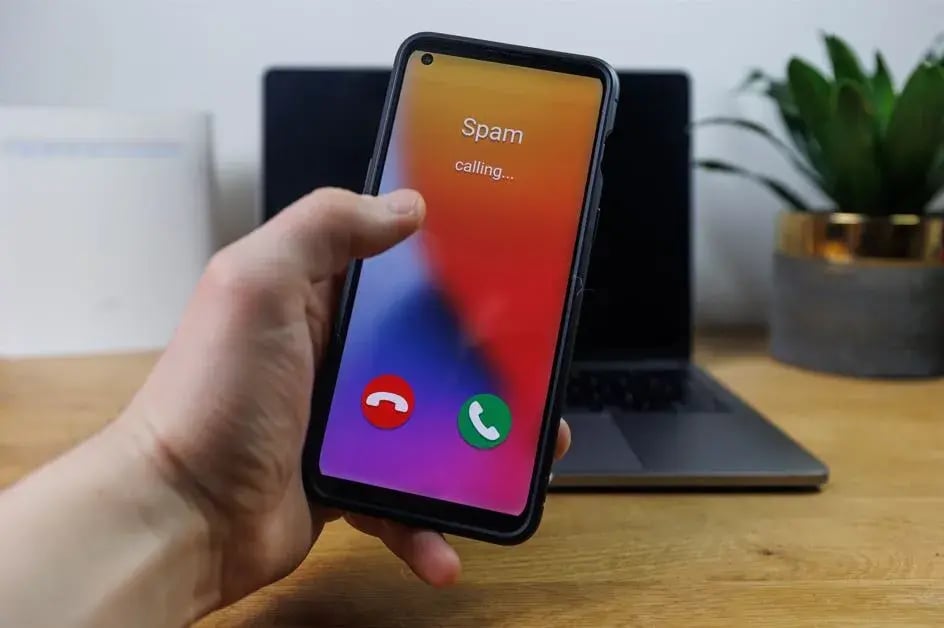
Most outbound teams have a vague sense that "calling too much" causes spam flags. The reality is more specific, and understanding it helps you protect your numbers proactively.
Carriers use machine-learning analytics engines that process massive volumes of call data in real time. The signals they're looking for include:
- Double-tapping: calling the same number twice in rapid succession. This is one of the fastest ways to trigger a flag.
- Unusual call volume over a short window: a number that suddenly spikes in outbound activity looks automated to a carrier's system.
- Multiple consumer complaints: when people mark a number as spam, that feedback feeds directly into carrier and app-level scoring.
- Short call duration patterns: some carriers weigh the average call length heavily. A number that dials constantly but rarely has a real conversation looks like a robocaller.
The complication is that each carrier runs a different analytics engine. What gets a number flagged on T-Mobile might not flag it on Verizon. Call duration might matter more to one carrier's model than another. Apps like Hiya, First Orion, and TNS each have their own scoring systems layered on top of carrier data. Staying off spam lists and staying within legal boundaries go hand in hand. Our TCPA Compliance page covers the regulatory side of outbound dialing.
This is why the "we rotate numbers" strategy doesn't work the way teams think it does. Rotating numbers doesn't reduce your flag risk. In some cases, spinning up new numbers and hitting high volume quickly actually increases the risk.
One thing worth knowing before you run a check on your numbers: not all flags are the same, and they are not all fixed the same way. A "Spam Likely" label means the carrier's algorithm has flagged your calling behavior, and it can be remediated through the process described in this post. A "Telemarketer" label is different. It gets assigned based on how the number was registered or how it has historically been used, and it does not respond well to standard remediation. If your number shows "Telemarketer" at the carrier level, the better move is to replace it before enrolling in a remediation service. NCC checks every number's status before you pay anything, so you will know exactly what you are working with upfront.
STIR/SHAKEN: the authentication layer most agents overlook
Spam labels and STIR/SHAKEN are two separate problems, but they are connected in a way that matters for outbound insurance teams.
STIR/SHAKEN is an FCC-mandated call authentication framework that assigns a trust level to every outbound call. The carrier receiving your call uses it to decide how much confidence to place in your identity. There are three levels:
-
A-level attestation (Full): Your carrier has fully verified your identity and your right to use the number. This is what you want.
-
B-level attestation (Partial): Your identity is verified, but not the specific number. Lower trust, but still acceptable.
-
C-level attestation (Gateway): Your carrier could not verify you at all. Calls with C-level attestation are significantly more likely to be filtered or flagged as spam before they even ring.
The problem is that many VoIP providers and phone systems used by insurance agencies are not set up to deliver full A-level attestation, and most agents have no idea what level their calls are being sent with. If your provider is only passing C-level attestation, you are already disadvantaged before a single consumer complaint comes in.
The fix starts with a direct conversation with your phone provider. Ask them what attestation level your outbound calls carry. If they cannot give you a clear answer, or if the answer is C, that is worth addressing before investing in anything else. STIR/SHAKEN attestation does not replace spam remediation, but without it, remediation is working against a headwind.
The behaviors that silently kill answer rates before any flag shows up
Even before a number gets officially labeled, certain dialing habits erode answer rates over time. Teams often don't connect the behavior to the outcome because there's a lag between the cause and the effect. At the scale of a full Telemarketing SDR operation, a single flagged number can affect dozens of reps and hundreds of dials before anyone notices.
The biggest ones we see:
- Double-tapping: calling the same contact back-to-back within minutes. It triggers flags faster than almost anything else.
- Calling more than four times in a single day to the same number. Beyond four attempts, the incremental contact rate is negligible, and the flag risk climbs.
- Using a single shared outbound number across multiple reps. The call volume concentration on that number accelerates wear. Every rep should have a dedicated outbound line.
- Assuming that because nothing is flagged today, nothing needs to change. Carrier scoring is dynamic. Behavior that was fine last month can cross a threshold this month based on updated models.
What it actually costs when you go 30, 60, or 90 days flagged without knowing

Think about your current contact rate. If you're running a healthy outbound operation, you might be connecting with 25 to 35 percent of the people you dial. Now imagine that drops to single digits overnight.
How many fewer quotes does that generate? If your close rate stays the same but you're quoting a fraction of normal volume, how many fewer households are you writing each week? Each month?
The lead cost doesn't change. You're still paying for every dial. The difference is you're getting almost nothing back from a significant portion of them.
There's also a second cost that's harder to put a number on. When reps dial all day, and nobody picks up, it damages their mentality. Confidence drops. Energy drops. They start questioning the leads, the process, and sometimes themselves. That morale damage takes longer to recover from than a technical fix. And it's entirely preventable.
Thirty days of operating flagged without knowing it can represent a significant chunk of your monthly marketing budget, producing almost nothing. Sixty or ninety days compounds that significantly.
What proper spam monitoring and remediation actually looks like

A legitimate spam monitoring and remediation setup isn't a one-time check. It's an ongoing operational process. Here's what it should include:
- Daily monitoring of all active outbound numbers across carriers.
- Automated alerts the moment a flag is detected, before that number burns more leads.
- Active remediation is working on the back end to work with carriers on removal.
- A client-facing portal where you can see the status of each number and make changes without waiting on a support ticket.
- Email alerts for flag events and clearances so the team is never in the dark.
- Proactive testing across carriers, what we call spam wars, where numbers are checked against T-Mobile, Verizon, AT&T, and app-level systems to see how they're being labeled before problems show up in performance data.
The goal is to know three things at all times: whether you're being mislabeled, which carrier is doing it, and that remediation is already working. That's the operational standard. Anything less is reactive, and reactive is expensive. Spam flags are only part of the answer rate problem. AI Call Screening Is Hitting Insurance Teams Hard covers the other side of why outbound teams are seeing contact rates drop.
Yes, small teams need this too

The size of your outbound operation doesn't change the risk. If you're investing money in leads that require you to pick up the phone and dial to reach someone, your contact rate is the first stage of your sales funnel. Investing in protecting it is not optional.
For small teams of two or three people, the starting point is simple: make sure every rep has a dedicated outbound line. Don't run multiple reps off the same number. The volume concentration alone accelerates flag risk faster than almost anything else.
If you want to see the impact directly, run an A-B test. Put one agent on spam remediation and leave one without it for a week. Compare contact rates, conversations started, and quotes generated. The data makes the case more clearly than any pitch will. If you're investing in internet leads and making outbound calls to work them, your contact rate is the first stage of your funnel. Protecting it is non-negotiable.
The honest answer to "we're not flagged right now"
Not being flagged today is not a strategy. It's a current status. It changes without warning and often without an obvious cause.
The teams that wait until they're flagged to invest in monitoring are always paying more in the end. The cost of a week of degraded performance and wasted lead spend almost always exceeds the cost of the monitoring solution that would have prevented it.
As Peter Godley put it: your number's reputation is your brand's reputation. On outbound, your number is the first thing a prospect sees. If it says spam before you even have a chance to say hello, the sale is already lost.
For a step-by-step breakdown of the full remediation process, including how to check your number status, submit carrier removal requests, and set up ongoing monitoring, see: Spam Remediation for Insurance Agencies: The Complete Guide.
If you're running outbound and you don't have a spam monitoring and remediation process in place, reach out to the Next Call Club team. We'll walk you through what we use, what we've seen, and what makes sense for your operation.
This blog is a collaborative piece by:




Leave a Reply